
Sanspareil
Oriental Building
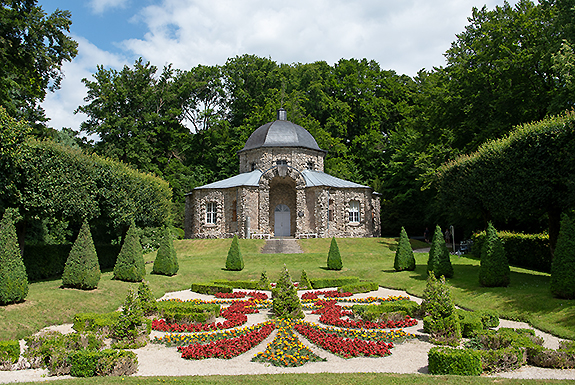
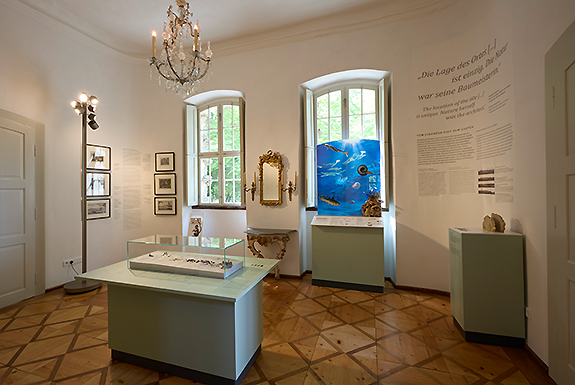
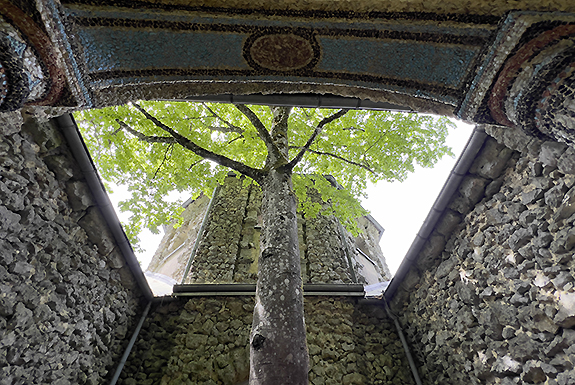
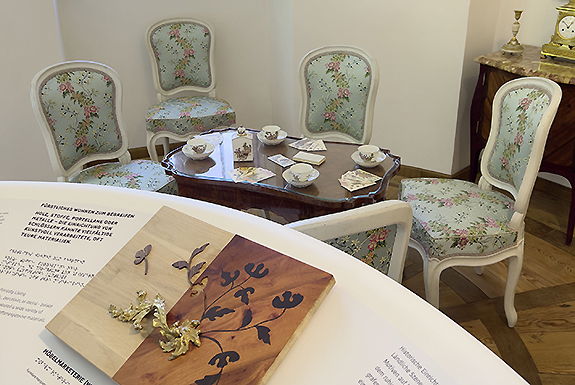
The Oriental Building was primarily named after a feature that no longer exists. The orientally inspired roof of the main building and the domed roofs of the side buildings had already had to be replaced in the 18th century because they were not weatherproof. However, the exterior with its paste and tuff decoration still has a fairy-tale, oriental look about it. This contrasts with the interior, which is designed in the simple and elegant Bayreuth Rococo style. The centerpiece of the ensemble is the courtyard, where a large beech tree forms the natural heart of this man-made building.
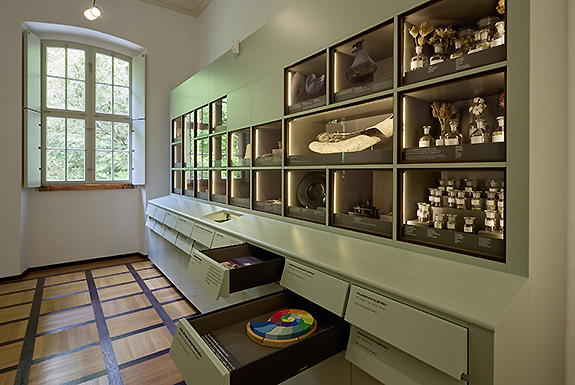
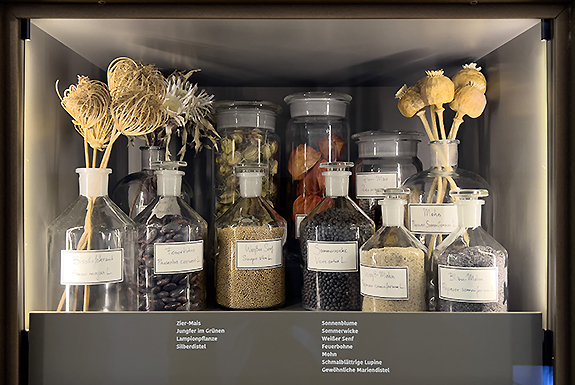
Originally built as a rural hermitage and idyllic retreat for the Bayreuth margraves, the Oriental Building is now open to the public as a museum. It houses a permanent exhibition for people of all ages where the diverse natural and cultural history of Sanspareil can be explored with all the senses. How did a shelf in the Jurassic sea populated by saurians and sea urchins become a Baroque garden complex unique in the European history of garden design? How did Greek heroes and a Chinese dragon end up in Upper Franconia? And what exactly was the source of the Bayreuth margraves’ great wealth?
The answer to this last question can, if nowhere else, be found in the rock garden itself: its bizarre setting is evidence of the fascination exerted by the geological formations of Franconian Switzerland – a fascination also shared by Margrave Friedrich, as his natural history collection is full of stones and fossils. With its vivid descriptions and interactive options, the permanent exhibition has brought the scattered and substantially diminished margravial collection to life in all its rich variety – from a small ape that became part of the collection after its life as a margravial pet to the fossilized teeth of a cave bear and stones and minerals from margravial lands to an artistically carved ivory bowl from the original margravial natural history collection.

